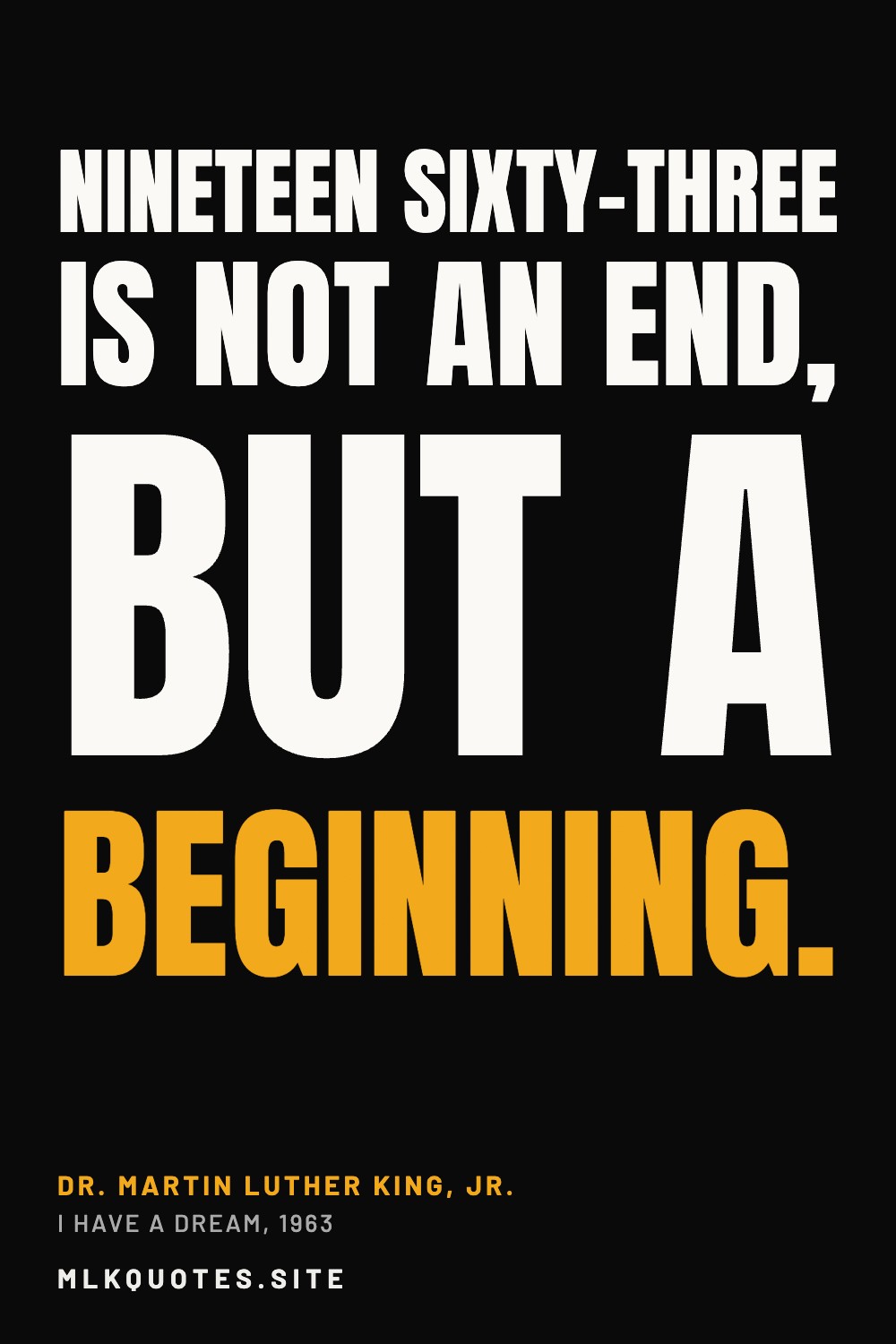
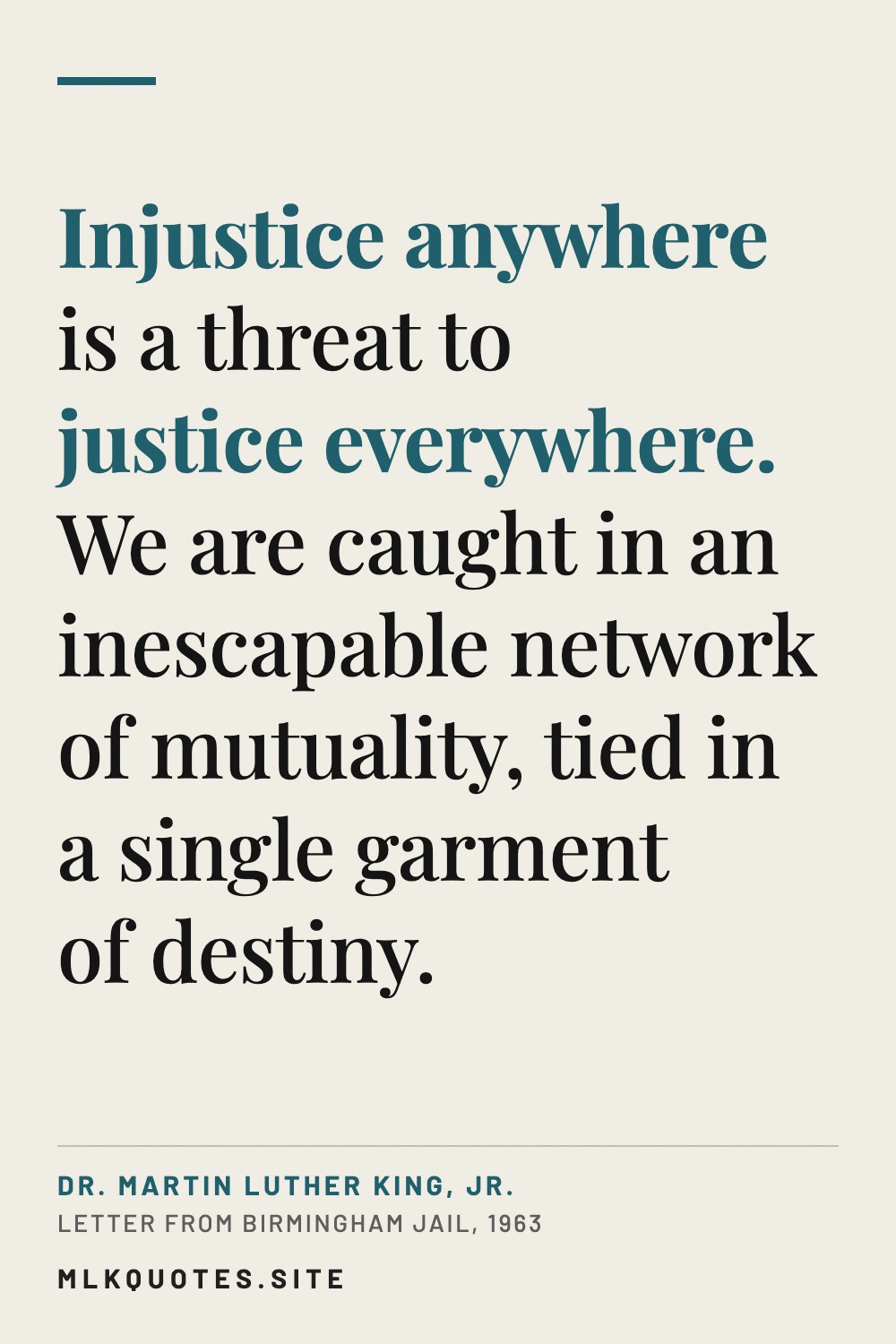
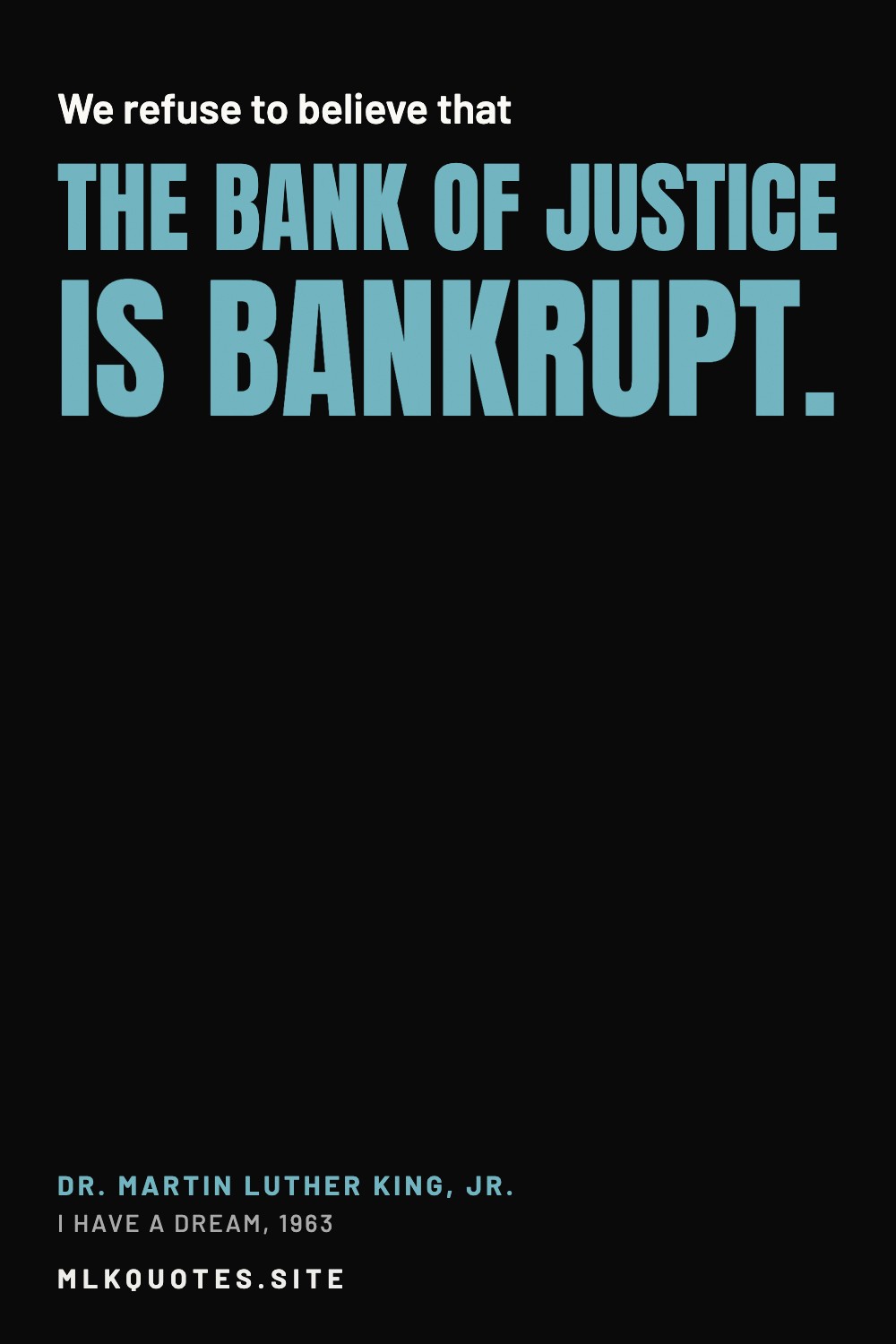
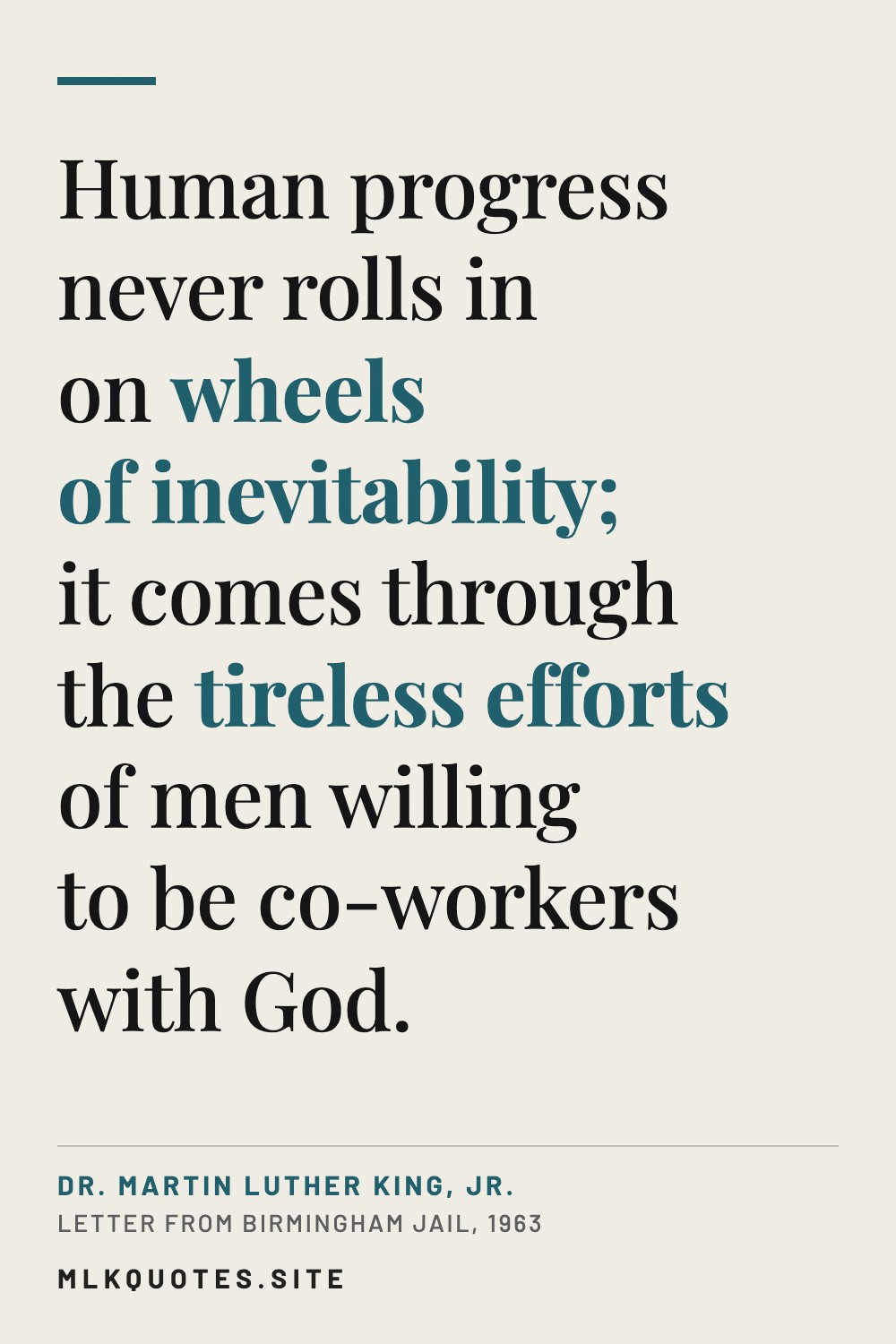
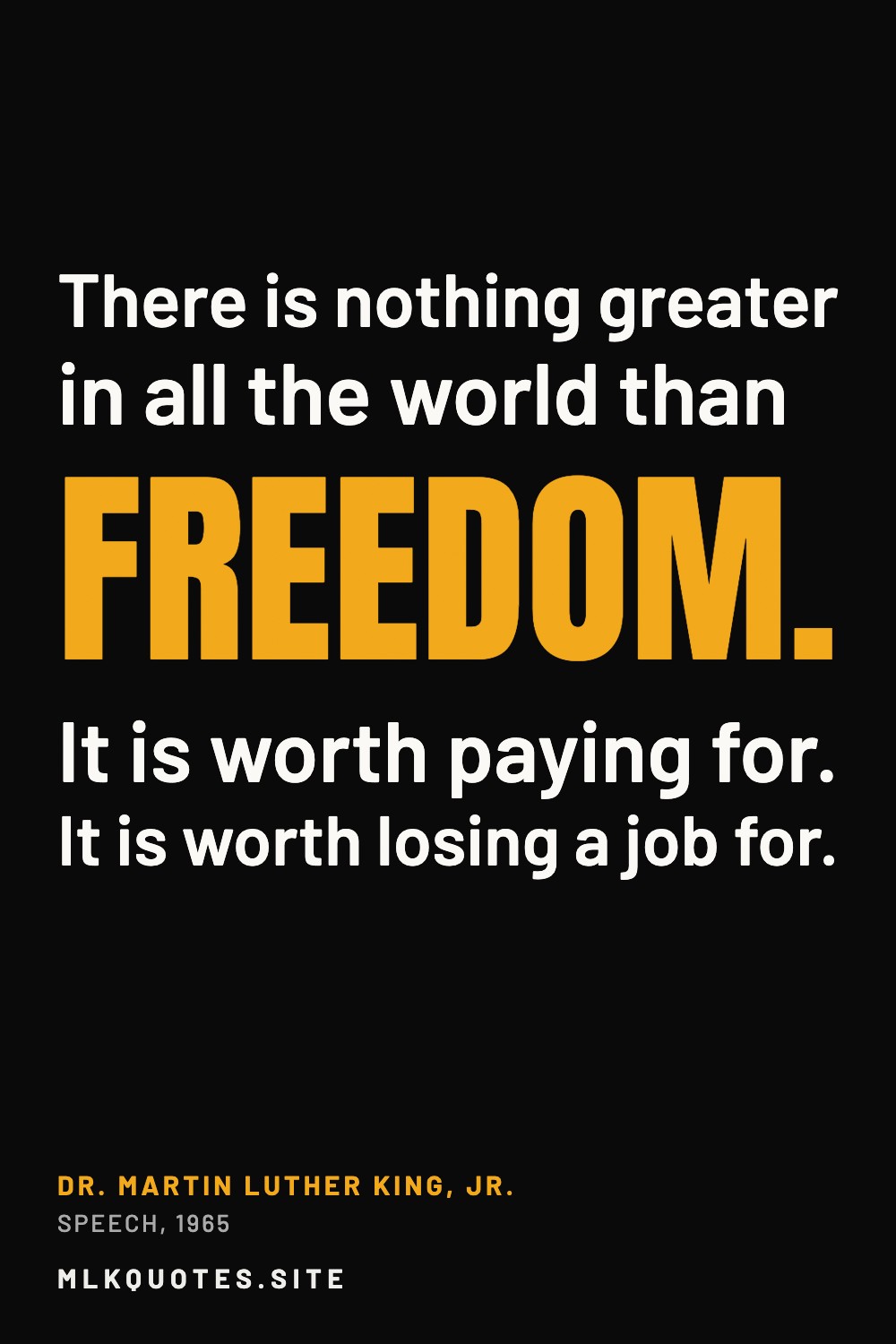
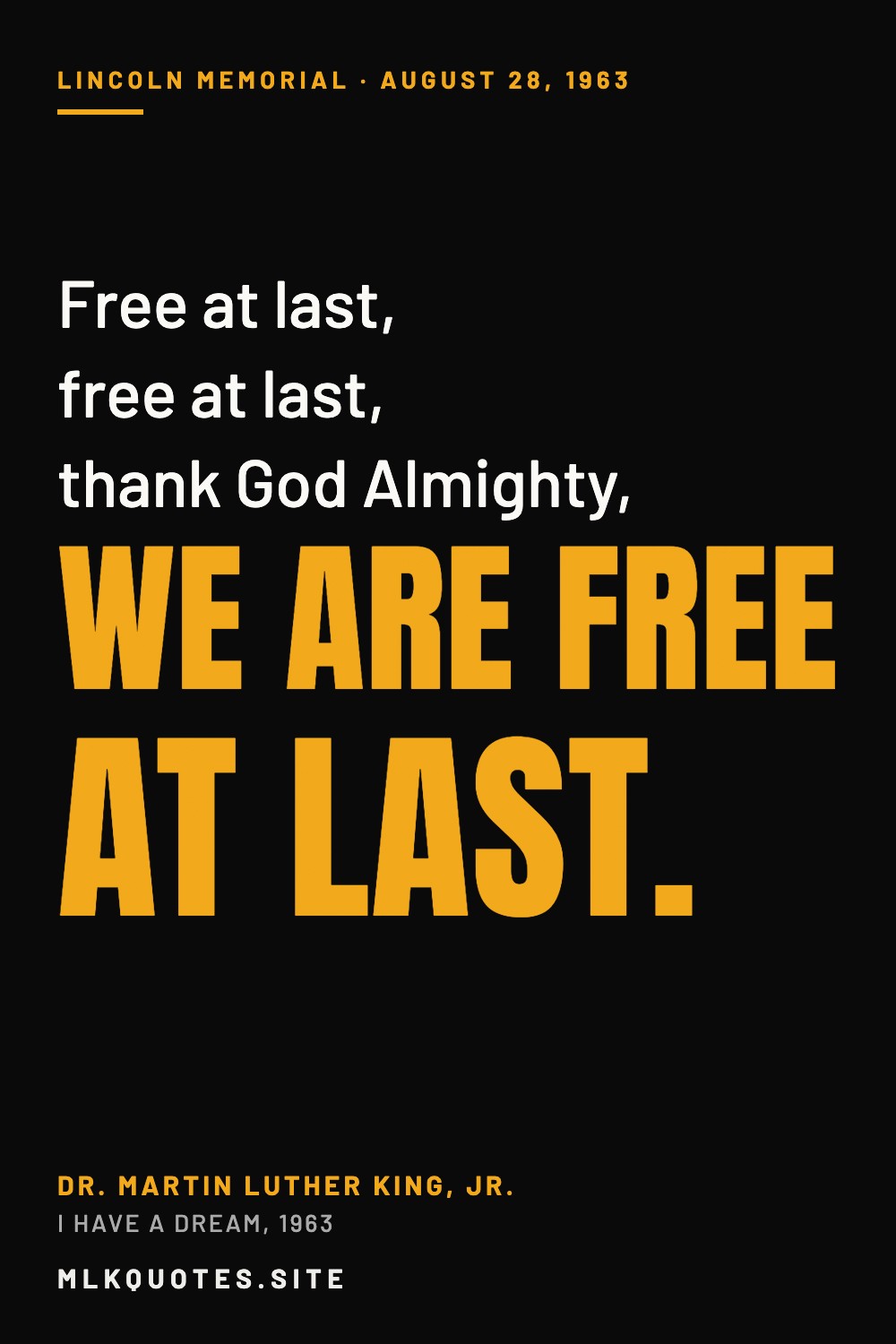
King’s defining line on justice is “Injustice anywhere is a threat to justice everywhere,” written in the Letter from Birmingham Jail, dated 16 April 1963. Many of his other justice quotes come from the same letter, from his speech at the end of the Selma to Montgomery march on 25 March 1965, and from his 1964 Nobel speeches.
M27 quote images · Checked by Maddy · Updated 6 October 2026
Justice quotes
Tap an image to open it full size. Use the buttons to save it to Pinterest, share it, or download it.
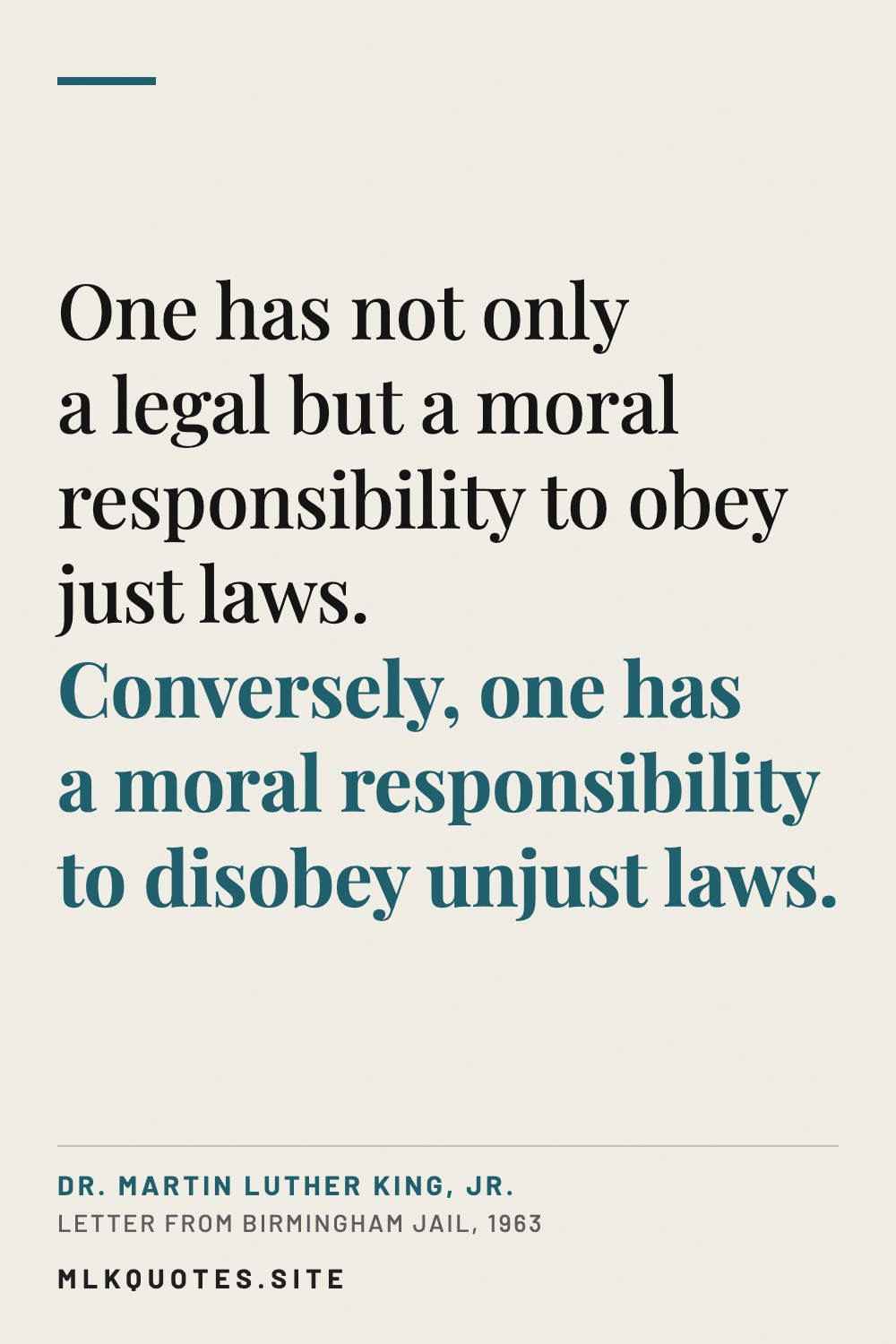
“One has not only a legal but a moral responsibility to obey just laws. Conversely, one has a moral responsibility to disobey unjust laws.”
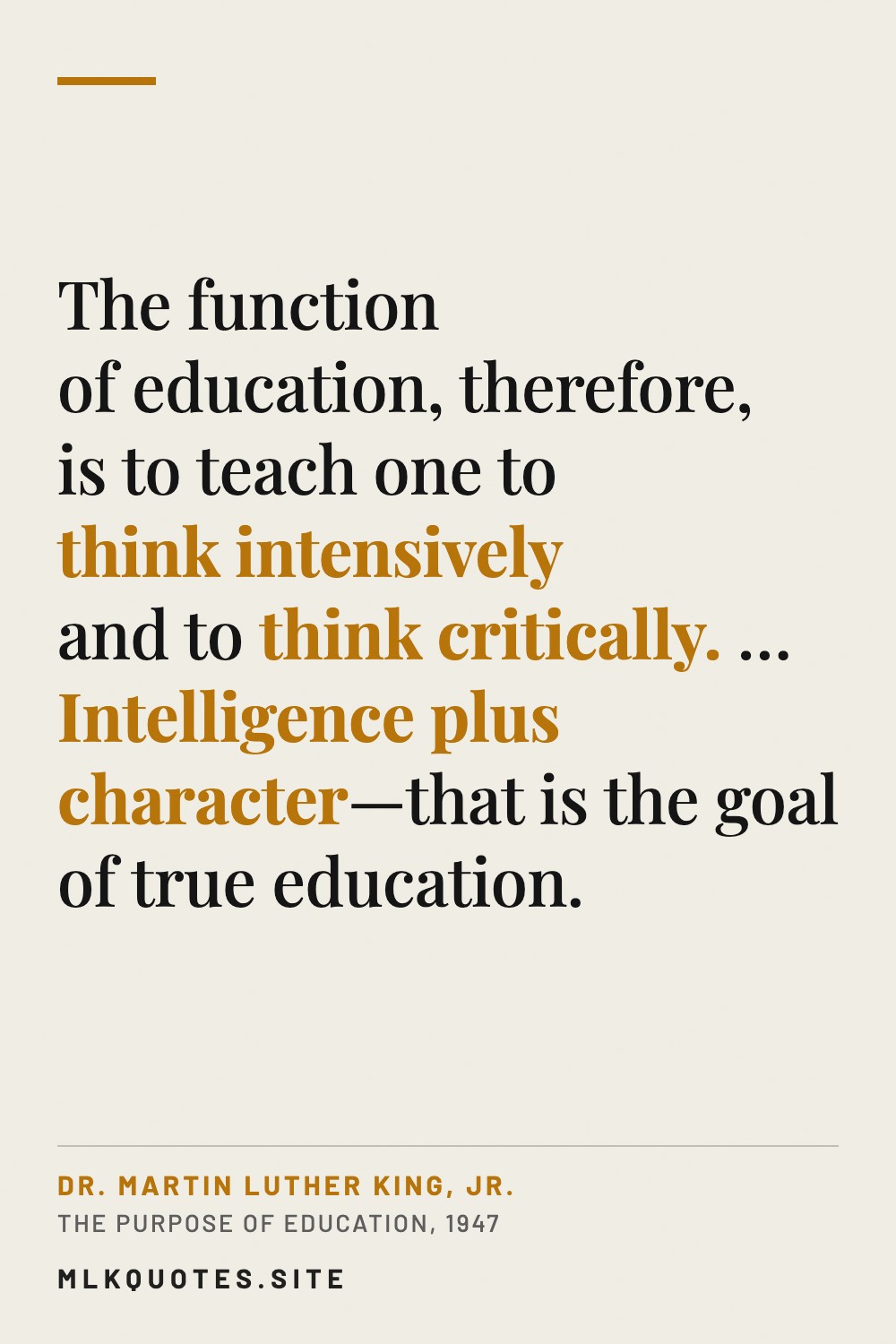
“The function of education, therefore, is to teach one to think intensively and to think critically. … Intelligence plus character—that is the goal of true education.”
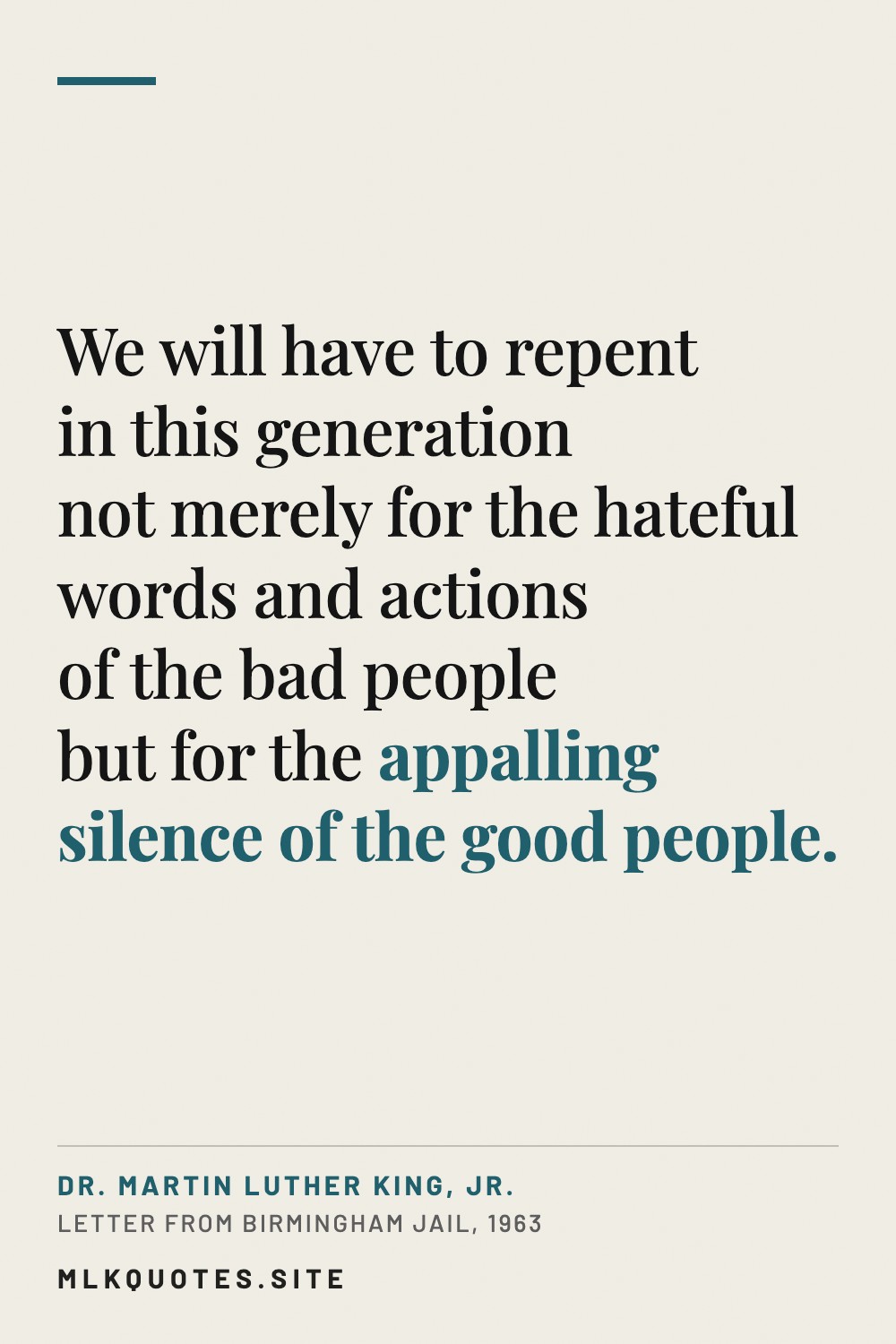
“We will have to repent in this generation not merely for the hateful words and actions of the bad people but for the appalling silence of the good people.”
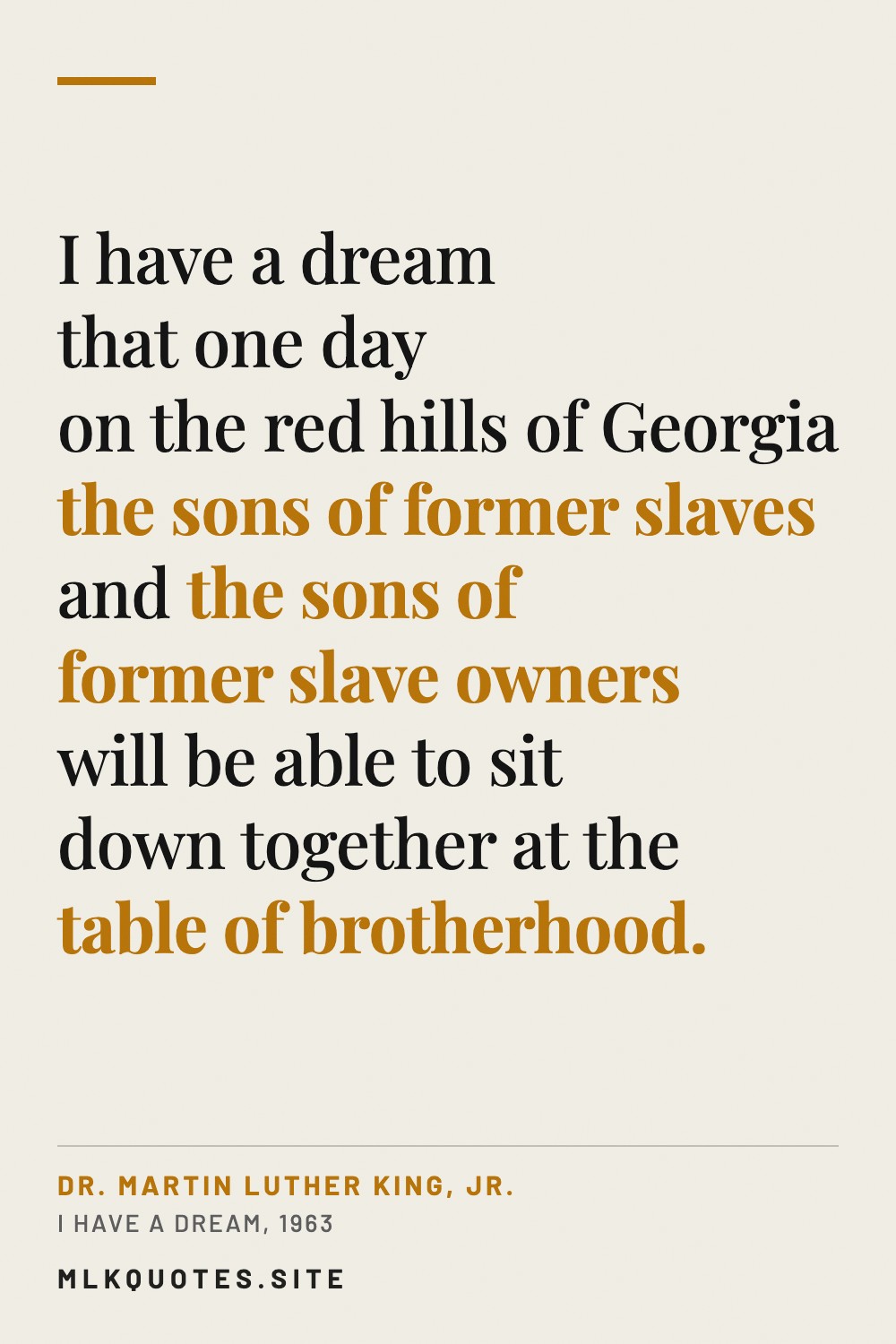
“I have a dream that one day on the red hills of Georgia the sons of former slaves and the sons of former slave owners will be able to sit down together at the table of brotherhood.”
The Birmingham campaign was barely a week old when King was arrested on 12 April 1963. The same day, eight local clergy members published a statement in the Birmingham News calling the demonstrations “unwise and untimely” and asking Black residents to rely on the courts (King Institute). King’s answer, dated 16 April, became the Letter from Birmingham Jail. A year later he revised it into a chapter of his book Why We Can’t Wait (1964).
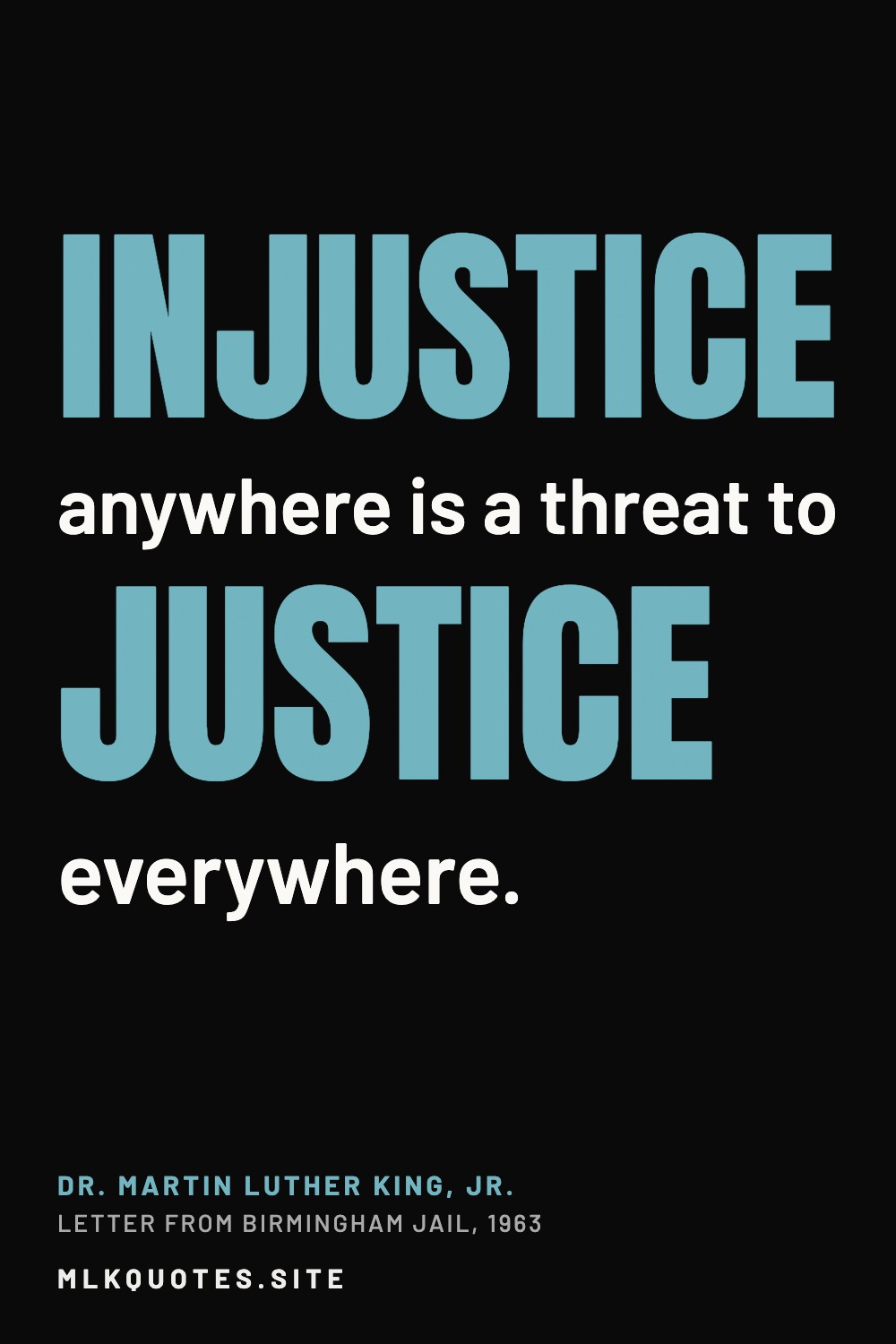
Read whole, the letter is a step-by-step argument rather than a string of slogans. He answers the charge that he’s an outsider (“Injustice anywhere is a threat to justice everywhere”), the charge that the protests are badly timed (“the time is always ripe to do right”), and the demand that he wait. He also explains how a person can urge people to obey some laws and break others.
“How long? Not long”
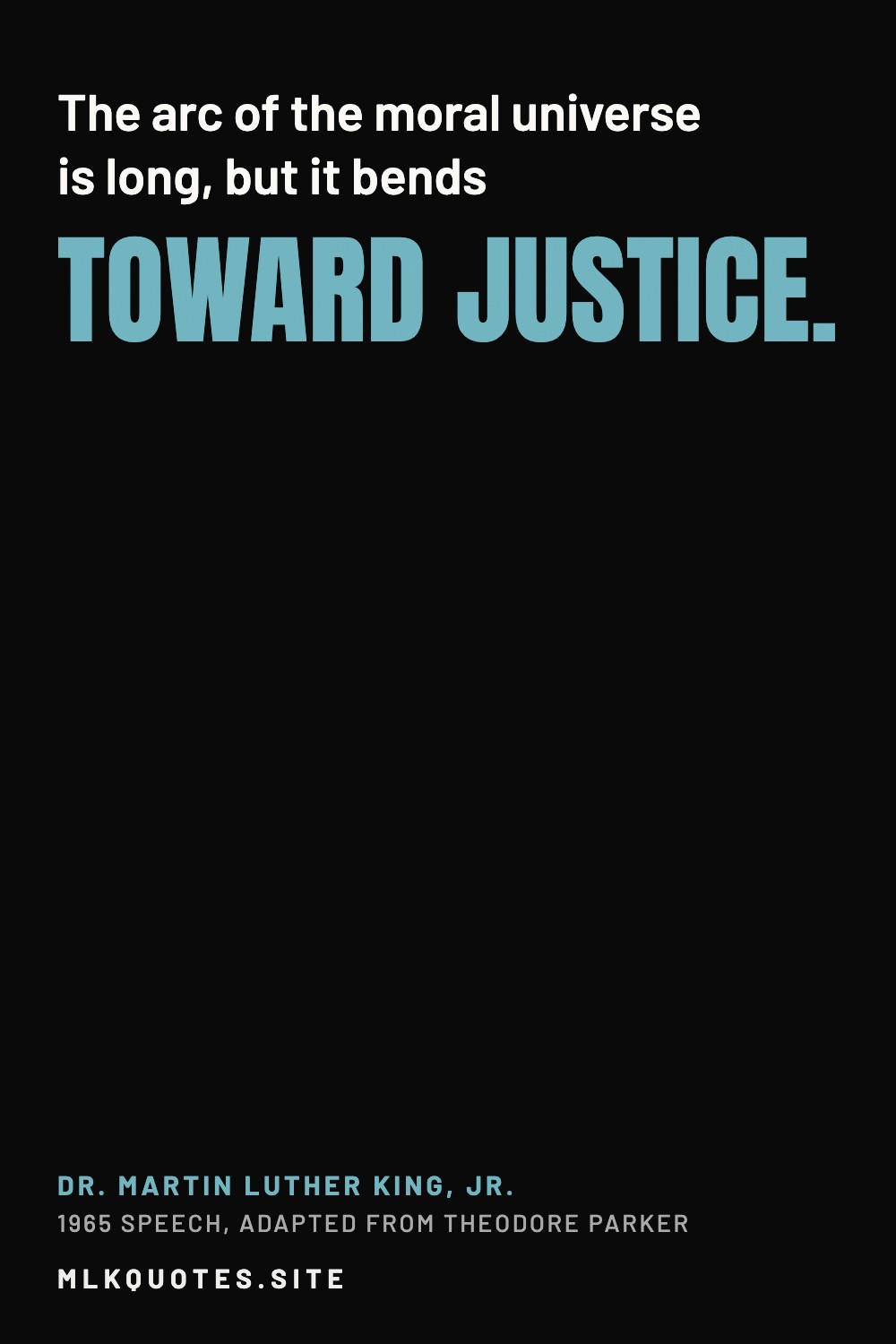
On 25 March 1965, after a five-day, 54-mile march from Selma, King led thousands of demonstrators to the steps of the Alabama capitol in Montgomery (King Institute). His speech that day built to a call and response, “How long? Not long,” and it included “the arc of the moral universe is long, but it bends toward justice.” The image was borrowed from Theodore Parker, an abolitionist minister writing in 1853. King made it shorter and famous.
Quoting these lines correctly
“Injustice anywhere…” is often cut after the first sentence. The next two sentences (“We are caught in an inescapable network of mutuality…”) are his reasoning.
“The arc of the moral universe…” is King’s wording, but credit Parker if you’re writing about where the idea came from.
Frequently asked questions
What did Martin Luther King Jr. say about justice?
That injustice in one place endangers everyone: “Injustice anywhere is a threat to justice everywhere. We are caught in an inescapable network of mutuality, tied in a single garment of destiny.” He wrote it in the Letter from Birmingham Jail (1963). Full story of this quote.
Who said “The arc of the moral universe is long, but it bends toward justice”?
King said it, most famously at the end of the Selma to Montgomery march on 25 March 1965 (“How long? Not long, because the arc of the moral universe is long, but it bends toward justice,” King Institute text). The image comes from the abolitionist minister Theodore Parker, who wrote in 1853 that the arc “is a long one” and that “it bends towards justice” (Quote Investigator).
Why was King in the Birmingham jail?
He was arrested on 12 April 1963 for violating Alabama’s law against mass public demonstrations during the Birmingham campaign. That same day eight Birmingham clergy members published a statement calling the protests “unwise and untimely,” and the letter was his reply (King Institute).
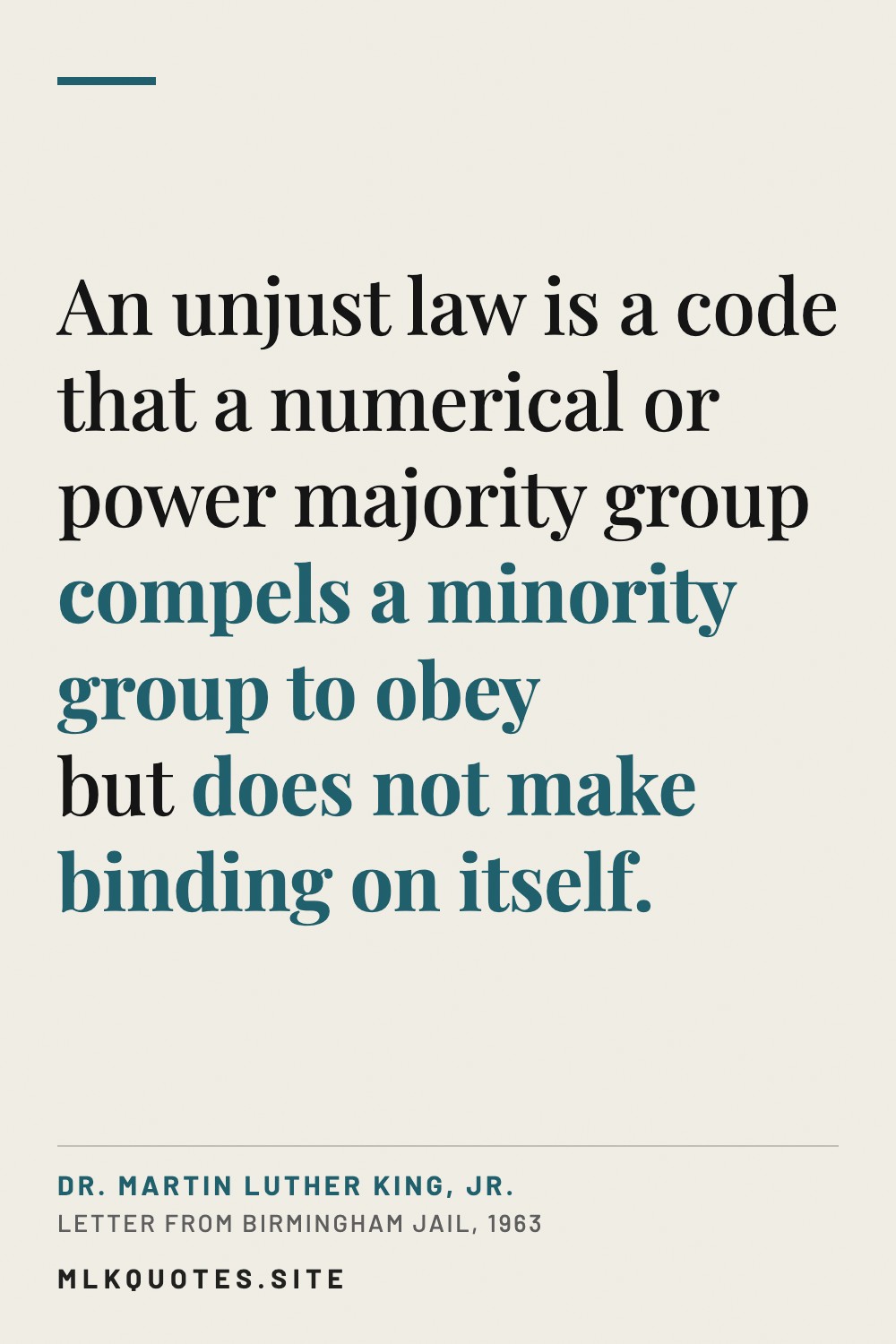
What did King say about unjust laws?
In the same letter he wrote: “One has not only a legal but a moral responsibility to obey just laws. Conversely, one has a moral responsibility to disobey unjust laws.” He added that “one who breaks an unjust law must do so openly, lovingly, and with a willingness to accept the penalty.”
How this page was made: written with AI assistance from the primary sources listed above.Every quotation and fact was checked against those sources by Maddy on 6 October 2026. How we verify · Last updated 6 October 2026